



For property managers with hundreds or even thousands of doors, home rental scams aren't just isolated headaches. They're a direct assault on your operational efficiency and, ultimately, your portfolio's bottom line. These scams actively drain resources, tarnish your brand, and drive up vacancy costs, directly impacting key metrics like Days on Market (DOM) and lead-to-tour conversion rates.
The Financial Drain of Fraud on Large Portfolios
When you're operating at scale, the fallout from a single rental scam goes way beyond one unlucky renter. It kicks off a ripple effect that hits your profitability directly.
Every time a scammer creates a fake listing that mimics your brand, they're siphoning qualified leads away from your actual vacancies. This forces your leasing team to waste precious time chasing down dead-end inquiries. That isn't just an annoyance; it’s a measurable financial drag on your entire operation.
As your portfolio grows, so does your risk. A scammer doesn't even need to hack your systems to do real damage—they just need to clone one of your listings on a popular site. With every new property you add, the opportunity for your brand to be exploited multiplies, making old-school manual monitoring completely unsustainable for any multi-market property management operation.
The Scale of the Problem
This isn't just a theoretical problem. The latest data shows a growing epidemic that’s hitting the rental market—your market—hard.
Since 2020, renters have filed nearly 65,000 rental scam reports with the Federal Trade Commission (FTC), adding up to a jaw-dropping $65 million in losses. The median loss for each victim is a painful $1,000, and that only counts the scams people actually report. A huge chunk of these scams get their start on platforms like Facebook and Craigslist, the very same places your legitimate listings are competing for attention.
This explosion in fraud creates a cascade of problems for your business:
- Inflated Days on Market (DOM): Your team burns critical hours vetting and responding to leads from fake listings. That's time they should be spending on leasing your actual vacant units. Every day a unit sits empty because of these distractions is a day of lost revenue.
- Lower Lead-to-Tour Conversion: When legitimate prospects get tangled up with scammers or just become suspicious of all online listings, your conversion rates take a nosedive. This inefficiency is a direct hit to your speed-to-lease, a metric that’s vital for portfolio performance.
- Damaged Brand Reputation: A prospect gets ripped off by a fake listing using your company’s name and your property photos. Who do they blame? You. That negative association is now tied directly to your brand, chipping away at the trust you've built across multiple markets.
ROI Impact Calculation: For a large portfolio, just a 5-day increase in average DOM across 100 vacant units at $2,000/month adds up to over $33,000 in lost revenue. Scams are a major contributor to these costly delays, creating chaos and inefficiency in your leasing funnel.
At the end of the day, fighting home rental scams at scale demands a modern, technology-driven defense. Trying to keep up manually is no longer a winning strategy for protecting your assets or hitting your financial targets. You can learn more by exploring how Showdigs is addressing the growing epidemic of rental scams. This guide will give you the frameworks you need to build that defense.
Deconstructing Common Home Rental Scams
To protect a large portfolio from rental scams, you first have to get inside the mind of the scammer. They use a variety of clever tactics designed to exploit weak spots in the leasing process. Understanding the anatomy of these schemes is the first real step toward building a solid defense.
For anyone managing hundreds or thousands of properties, these scams aren't just isolated headaches. They're systemic threats that bleed your resources, chip away at your brand’s reputation, and open you up to serious legal trouble. The costs—both financial and operational—add up fast across a distributed portfolio.
This breakdown shows just how much rental scams can really cost a property management company, hitting everything from your bottom line to your team's bandwidth.
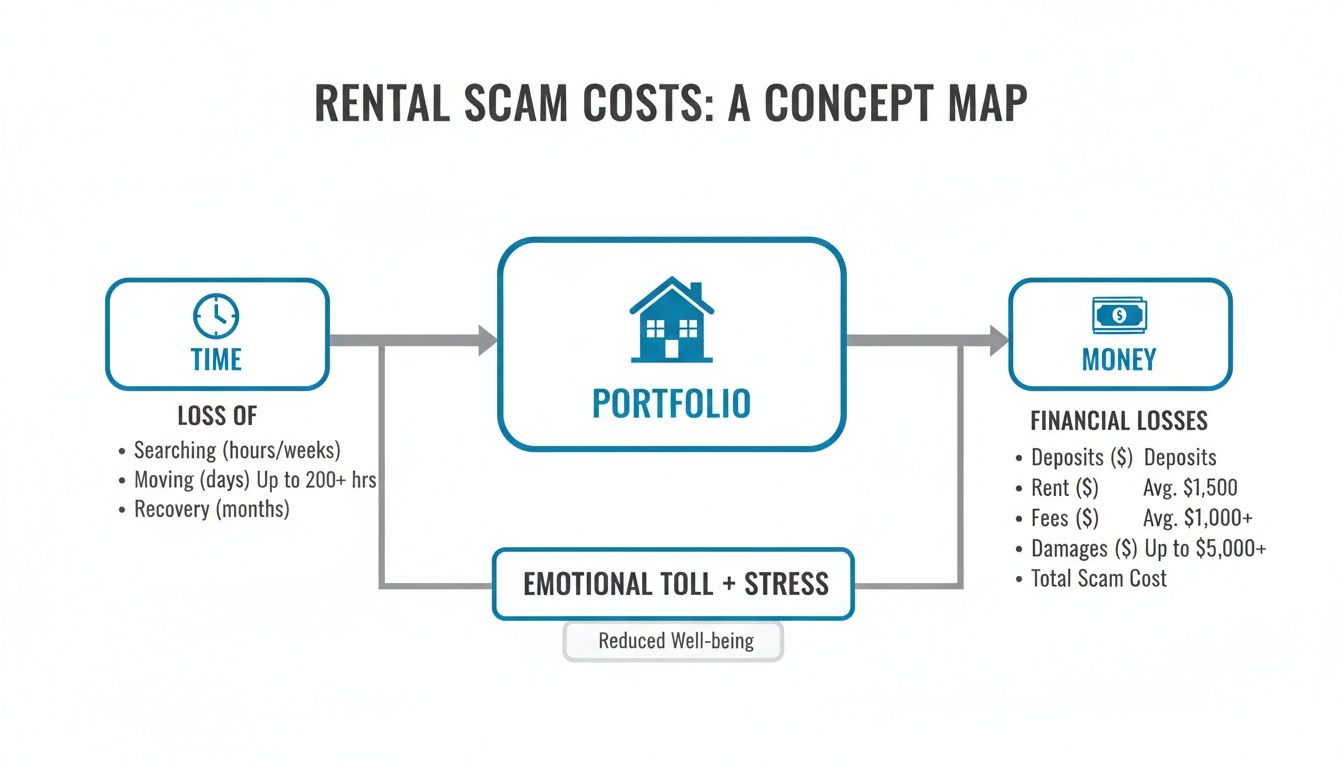
As you can see, the damage goes far beyond one lost deposit. It creates a ripple effect that impacts leasing agent productivity, marketing spend, and your portfolio's overall profitability.
To build a strong defense, it's crucial to know exactly what you're up against. Scammers have a playbook of common tactics they use to trick both renters and property managers. The table below outlines the most frequent schemes, what to watch out for, and how they can directly impact your key performance indicators (KPIs).
Common Rental Scam Tactics and Their Red Flags
By familiarizing your team with these red flags, you can start spotting fraudulent activity before it escalates into a major operational or financial crisis.
Listing Hijacking and Phantom Rentals
The most common scheme by far is listing hijacking. Think of it as digital identity theft for your properties. Scammers will literally copy and paste your legitimate listings—photos, descriptions, everything—from Zillow or your own website. Then, they’ll repost them on less-regulated platforms like Facebook Marketplace or Craigslist with a ridiculously low price tag.
Their endgame is simple: intercept real leads, pretend to be your leasing agents, and collect application fees or security deposits for a home they have zero connection to. An especially nasty version of this involves fake real estate listings, which not only causes huge financial losses for renters but also poisons your brand’s reputation.
A close cousin to this is the phantom rental. Here, scammers invent a listing from scratch for a property that’s either occupied or doesn't exist at all. They’ll use AI-generated images or photos scraped from old listings to build a convincing front, preying on desperate renters in tight markets.
The Bait-and-Switch Scheme
Another classic tactic is the bait-and-switch. In this setup, a scammer advertises a fantastic, under-market-price unit to get a flood of applicants. Once a prospect is emotionally invested, the scammer pulls the rug out, claiming that specific unit was just rented.
But then comes the pivot. They immediately offer a different property—one that’s not as nice or costs more. This move wastes everyone's time and makes your real listings look suspicious by association.
For a portfolio manager, the operational drag is immense. Each fraudulent listing can generate dozens of unqualified inquiries, flooding your leasing agents with calls and emails that lead nowhere. This noise directly inflates your Days on Market (DOM) and kills your lead-to-tour conversion rates.
Fraudulent Application Mills
Perhaps the most direct threat to your bottom line is the rise of fraudulent application mills. These are organized operations where scammers bombard you with applications using stolen or completely fabricated identities. They’re sophisticated, too, using tools to create fake pay stubs, bank statements, and references that look shockingly real.
If a fraudulent tenant slips through your screening, you're on the hook for a world of pain: costly evictions, potential property damage, and thousands in lost revenue. These scams lay bare the weaknesses of manual screening, especially when you’re trying to manage applications at scale. It's critical to know these threats inside and out—and even more critical to understand how modern tools can help you fight back. You can learn more in our guide on how to prevent self-guided rental tour scams.
When it comes to home rental scams, playing defense is a losing game. Cleaning up the mess after a scammer has already targeted your listings is expensive, time-consuming, and a surefire way to burn out your leasing team. For property managers with a growing portfolio, the only way to win is to get ahead of the problem.
Building a proactive defense based on clear, system-wide rules is the only scalable solution. This isn't about damage control; it's about prevention. It protects your brand, cuts down on vacancy costs, and frees up your team to do what they do best: lease properties to great tenants.

The trick is to establish a few non-negotiable policies that are easy to roll out across every single unit. Think of these less as "best practices" and more as operational mandates that slam the door on the most common tricks scammers use.
Standardize and Secure Your Listings
Your property listings are your digital storefront, and right now, they might be unlocked. A scattered, inconsistent approach to how you post your vacancies creates the exact kind of weak spots scammers hunt for.
First up, make digital watermarking a non-negotiable for all property photos. A simple, semi-transparent overlay of your company logo makes it much harder for a scammer to steal your images and pass them off as their own. It’s a small step that sends a big signal to prospects: this listing is the real deal, coming from a professional source.
Next, get serious about brand consistency. Every listing—whether it’s on Zillow, Apartments.com, or your own website—needs to have the exact same branding, contact details, and application links. This creates a unified front that helps renters immediately spot a fake.
Implement a Centralized Communication Protocol
Scammers work by pulling prospects off secure platforms and into the wild west of personal email, text messages, or WhatsApp. Don't let them. You need to create a centralized communication protocol that keeps every conversation inside a single, company-controlled system.
This means every listing should funnel inquiries into one official channel, like your property management software’s messaging tool or a dedicated leasing automation platform. Set up automated responses to immediately reinforce this rule. For example, an auto-reply can say, "Thanks for your interest! For your security, all our communication will happen right here on this platform."
This one move achieves two huge goals:
- It creates a paper trail: Every conversation is logged and auditable, which is invaluable if a dispute ever arises.
- It cuts off backchannels: Scammers lose their ability to isolate a prospect, which neuters their entire strategy.
Establish a "No-View, No-Deposit" Policy
One of the oldest tricks in the scammer’s playbook is pressuring a prospect to send money for a property they’ve never set foot in. You can shut this down cold by establishing a firm "No-View, No-Deposit" policy.
Plaster this policy everywhere. Put it in bold on your listings and include it in your automated communications. A simple statement like, "Our company will never ask for a deposit or application fee before you have completed a verified in-person or virtual tour," works wonders.
This isn't just about stopping fraud; it’s a powerful trust signal. It tells the market you’re a professional, transparent operator who puts tenant security first—and that’s a huge competitive advantage.
Worried this will slow you down? It won't. With tools like on-demand showing services or self-guided tour tech, you can give prospects the instant, secure viewing options they want. You maintain your speed-to-lease while building a fortress around your listings. When you apply these frameworks consistently, you create a powerful barrier that scammers will find incredibly difficult to break through.
Using Technology to Fight Fraud at Scale
Trying to manually keep up with today's home rental scams is a losing battle, especially when you're managing a scattered portfolio. For property managers who want to stay ahead, the only real defense is to build a secure, verifiable, and automated leasing process with modern PropTech. This isn't just about plugging security holes; it's about making your entire operation more efficient, from the first click to a signed lease.
Manually vetting every single lead and application for hundreds of units is a fast track to bloated labor costs and high Days on Market (DOM). Technology is the only way to scale your defenses, creating built-in roadblocks that filter out scammers from the very beginning.
Automating the Leasing Funnel for Security
The fundamental idea is simple: control the entire journey a prospect takes within a single, secure system. A good leasing automation platform acts like a fortress, pulling communication out of vulnerable channels like personal email and text messages and into one auditable environment.
This centralized setup shuts down common scammer moves right away. When every interaction—from the first inquiry to scheduling a tour and submitting an application—happens on one platform, you have a transparent and verifiable record. Scammers can no longer easily impersonate your agents or redirect good applicants to fake payment websites.
AI-Powered Screening and Identity Verification
Rental fraud has gotten incredibly sophisticated, and application fraud is ground zero. According to a recent survey from the National Multifamily Housing Council (NMHC), 75% of apartment owners across the country reported a staggering 40% average increase in fraudulent rental applications last year, fueled by AI-forged documents like fake pay stubs. In some hot markets, fake applications make up as much as 18% of all submissions, which directly leads to higher eviction rates and piles on operational costs.
Manual screening just can't catch these anymore. That's where modern leasing platforms with AI-powered screening come in. They can:
- Flag High-Risk Applications: AI algorithms are trained to spot inconsistencies, doctored documents, and red flags associated with known scams. Suspicious applicants get flagged before your team ever wastes time on them.
- Verify Prospect Identities: This is a non-negotiable. Before a prospect can even set foot in a property for a tour, they should have to submit a government-issued ID that is automatically checked against public records.
- Secure Tour Scheduling: This ID check ensures only legitimate, vetted people are getting access to your properties. It dramatically cuts down the risk that comes with self-showings and keeps your assets safe.
Using tools like identity verification software solutions is no longer a "nice-to-have"; it's essential for preventing fraud at scale.
Integrating for a Seamless Workflow and Clean Data
The real magic happens when all your tech works together. When your leasing automation platform syncs directly with your main Property Management System (PMS)—like Appfolio or RentManager—you create a secure and seamless workflow from end to end.
This integration means prospect data is captured one time and flows through a controlled system. You eliminate manual entry mistakes, data gaps, and any opportunity for a scammer to intercept communications between your tools. It locks down your data integrity from lead to lease.
This unified tech stack does more than just stop fraud; it directly improves your bottom line. By automatically weeding out fake leads, you guarantee your leasing agents are only spending time on qualified prospects. This gives your lead-to-tour conversion rates a serious boost and is a huge factor in DOM reduction.
Every fraudulent lead you eliminate is one less roadblock to a faster, more profitable lease cycle. For property managers looking to armor their digital front door, Showdigs’ AI-powered Listing Shield adds another powerful layer of protection against listing hijackers. Ultimately, the right technology turns fraud prevention from a reactive headache into a proactive part of a smooth and profitable leasing operation.
Your Enterprise Incident Response Framework
Even with the best defenses, a motivated scammer can still find a way to hijack one of your listings. When that happens, a slow or messy response can be just as damaging as the scam itself. For anyone managing a multi-market portfolio, having a swift, standardized incident response plan isn’t just good practice—it’s essential.
A reactive, case-by-case approach simply doesn't work at scale. It burns precious time, creates confusion, and leads to inconsistent outcomes that can quickly tarnish your brand. A solid plan ensures every team member, from leasing agents on the ground to regional managers, knows exactly what to do the second a fake listing is spotted.
Immediate Takedown and Reporting Protocol
The first 24 hours are everything. Your one and only goal is to get that fraudulent listing torn down as fast as humanly possible to prevent more people from getting hurt. This calls for a clear, step-by-step protocol.
Here’s what that immediate action checklist should look like:
- Identify and Document: Grab screenshots of the fake listing immediately. Capture the URL, the scammer's contact info, and any sketchy conversations you have. This paper trail is your best friend when it comes to reporting.
- Report to Platforms: Get on Zillow, Facebook Marketplace, Craigslist, or wherever the fake ad appeared, and report it directly. Use their built-in fraud reporting tools. It helps to have one person or a small team own this process so it gets done fast and right every time.
- Alert the Authorities: File a formal complaint with the Federal Trade Commission (FTC) and the FBI's Internet Crime Complaint Center (IC3). While this may not result in immediate removal, it contributes to a larger database that helps law enforcement track and prosecute these criminal networks.
Standardizing Internal and External Communication
A scattered communication strategy is a recipe for chaos. You need a playbook for who needs to know what, and when.
Internally, the moment a fraudulent listing is confirmed, an alert needs to go out to all key players. That means the entire leasing team for that market, the property manager, and your legal counsel. The last thing you want is someone on your team accidentally giving out information that makes the scam seem legitimate.
Externally, you need pre-approved communication templates ready to go. When a victim inevitably calls you, your team needs a response that is both compassionate and legally airtight. This template should:
- Express genuine sympathy for their situation.
- Clearly state your company has zero affiliation with the fraudulent listing.
- Advise them to report the incident to local law enforcement and the FTC.
- Point them to your official website to see your actual, legitimate listings.
This standardized approach does more than just protect your company from liability. It shows you’re a responsible and proactive operator, turning a potential brand crisis into an opportunity to reinforce your professionalism.
By having a clear plan in place, you shift from chaotic reaction to decisive control. This not only minimizes the damage from any single home rental scam but also strengthens your operational resilience across your entire portfolio. You’ll be able to handle these threats efficiently and effectively, no matter where they pop up.
FAQs for Enterprise Property Managers
Even with the best systems in place, it’s natural to have questions about how to handle the murky waters of home rental scams. When you’re managing a large portfolio, the stakes are high. Here are some straight answers to the most common concerns we hear from property managers.
If Our Listing Gets Hijacked for a Scam, Are We Legally Liable?
Let’s get this one out of the way first. Generally, your company isn’t held legally liable for a scammer’s criminal acts. But the hit to your brand's reputation? That can be just as damaging—and costly.
Your best defense is a proactive one. Consistently watermarking your property photos, running your entire leasing process through one secure platform, and having a ready-to-go plan for reporting fraudulent listings shows you’re doing your due diligence. It’s all about having a clear, swift incident response plan. That’s what protects your integrity and shows prospects you’re a professional, trustworthy operator.
How Does Leasing Automation Actually Reduce Fraud Risk?
Think of leasing automation as creating a single, controlled, and fully traceable path for every applicant. It centralizes all your communication, which stops scammers from pulling good leads off to the side with personal emails or sketchy text messages.
Plus, tools with built-in ID verification and AI-powered screening can automatically flag suspicious applications before your team wastes a single minute on them. By controlling the entire journey from that first inquiry to the final lease signing, you build a fortress around your leasing funnel that’s incredibly tough for scammers to breach. It’s a win for security and efficiency, directly boosting lead-to-tour conversion rates.
What’s the Best Way to Warn Prospects About Potential Scams?
Keep it simple, clear, and consistent. The most effective approach is to include a brief, standardized warning on all your property listings and in your automated responses to inquiries. You set the right expectation from the very first touchpoint.
A simple message like this works wonders: "For your security, our company will never ask for a deposit before you’ve completed a verified tour. All official communication and application steps will come directly from our secure leasing platform."
This small step does two things: it protects potential tenants and immediately reinforces that your company operates professionally and securely.
Should We Bother Taking Legal Action Against Scammers?
Honestly, trying to sue individual scammers is usually a dead end. It’s expensive, time-consuming, and often impossible. These criminals are masters of anonymity, frequently operating from overseas, which makes them incredibly difficult to track down and hold accountable in court.
Your best strategy isn't legal—it's operational. Pour your resources into prevention and a rapid takedown process. Report fraudulent ads immediately to the listing sites (like Zillow or Facebook) to get them removed. At the same time, file reports with the FTC and the FBI’s Internet Crime Complaint Center (IC3), and give local law enforcement a heads-up. This helps contribute to the bigger fight against fraud.
Ready to strengthen your portfolio's defenses and close leases faster? Showdigs uses AI-backed leasing automation to create a secure, efficient leasing funnel that protects your assets, your reputation, and your bottom line.
.png)