


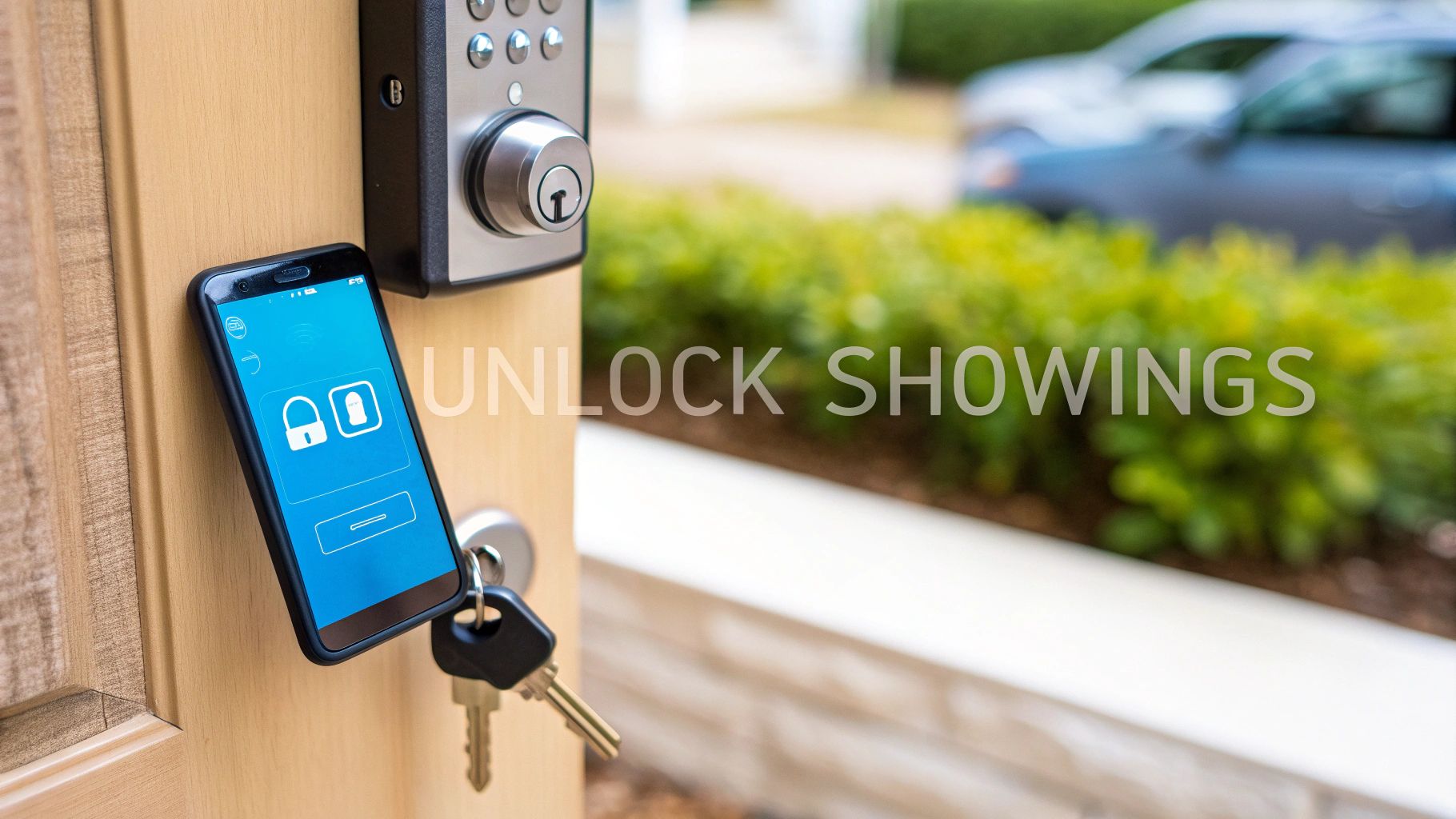
At its most basic, a lockbox is a secure container for a property key. But for property management companies managing portfolios of 500, 1,000, or even 10,000 units, it's a critical tool for cutting down Days on Market (DOM) and accelerating leasing velocity.
Instead of the endless back-and-forth coordinating agent schedules, a qualified prospect receives a one-time access code, retrieves the key, and tours the property on their schedule. This isn't just about convenience; it's a strategic operational shift that directly impacts revenue by filling vacancies faster.
How Lockboxes Unlock Faster Leasing Cycles & Drive Revenue
For any property management company focused on scaling, the time from lead to tour is a critical KPI. Every hour a prospect waits for a showing, the risk of them leasing from a competitor increases. This is where lockboxes fundamentally change the leasing game, transforming a manual, high-friction task into an on-demand service that directly boosts your bottom line.
By enabling self-service tours, lockboxes solve a massive logistical challenge, particularly for geographically dispersed portfolios. They allow you to offer the instant access that modern renters expect, providing a powerful competitive advantage that drives higher lead-to-tour conversion rates.
The Shift Toward Automated Access
The industry's move toward automated access is undeniable. The global key lock box market is projected to hit $2.5 billion by 2025, driven by large-scale property managers seeking more efficient, secure, and scalable solutions. This isn't just a trend; it's a fundamental shift away from manual key handoffs toward automated, trackable systems managed centrally. You can dive deeper into this market's growth and what it means for PMs.
This shift isn't just about operational ease—it’s about converting leads into leases faster. A scalable lockbox system delivers on three core operational needs:
- Secure Key Storage: A durable, weather-resistant casing protects keys from unauthorized access.
- Access Control Mechanism: This ranges from a basic mechanical dial to an electronic keypad or Bluetooth/cellular-enabled smart lock controlled via an app.
- Remote Management Capability: For smart lockboxes, this is the critical feature for scale. It allows operations teams to generate codes, schedule access, and review detailed activity logs for the entire portfolio from a single dashboard.
By automating the tour—the first physical touchpoint with a property—property managers can significantly reduce Days on Market (DOM) and see a measurable increase in lead-to-tour conversion rates. What was once a major operational bottleneck becomes a powerful revenue-generating advantage.
Now that we've covered the basics, let's analyze the different technologies and their impact on managing a large rental portfolio.
Lockbox Technology At-A-Glance for Property Portfolios
When you're managing hundreds or thousands of units, your choice of lockbox technology directly impacts team efficiency, portfolio security, and speed-to-lease. This table provides a quick operational comparison of the primary options.
Lockbox TypeAccess MethodBest Use Case for PMsScalability FactorMechanicalCombination dial/push-buttonLow-cost access for a handful of properties where code changes are infrequent and security risk is low.Low: Requires manual, on-site code changes, creating significant operational drag at scale.Battery-Powered E-LockElectronic keypad (numeric codes)Small to mid-sized portfolios needing scheduled or temporary codes without full remote connectivity.Medium: Codes can be pre-set, but lacks centralized, real-time management and logging.Bluetooth/NFCSmartphone app (proximity-based)Tech-forward portfolios where prospects and agents are comfortable using an app for access.High: Centralized control, but relies on user's device and Bluetooth range, which can be inconsistent.Cellular/SmartKeypad, app, or remote unlockLarge, distributed portfolios requiring real-time access control, audit logs, and remote management.Very High: Fully remote and scalable, offering maximum control, data insights, and integration potential.
As you can see, what works for a few doors quickly becomes an operational bottleneck as a portfolio grows. The leap from mechanical to smart, connected lockboxes is where true operational scale is achieved.
Mechanical vs. Smart Lockboxes: An Operational Breakdown
For large-scale property managers, the choice of lockbox is a core operational decision that directly impacts scalability, security, and the P&L. The right choice streamlines the entire leasing funnel. The wrong one creates expensive bottlenecks that inhibit growth.
At first glance, traditional mechanical lockboxes—the push-button or spin-dial models—appear cost-effective due to their low upfront price. But once you scale to 500, 1,000, or more properties, that initial "savings" is quickly consumed by hidden operational costs and security liabilities.
Every time a code needs to be changed on a mechanical box, a leasing agent or vendor must physically drive to the property. This trip represents a direct hit to your cost per door, introduces showing delays, and slows down the entire leasing cycle.
The Hidden Costs of Mechanical Systems
Mechanical lockboxes operate in a data black hole. You get zero oversight, no audit trails, and no verifiable way to know who accessed a property or when. This lack of visibility is a significant security and liability risk for any professional operator.
The greatest liability of a mechanical lockbox is its static access code. Once shared with a prospect, vendor, or former employee, that code is permanently compromised unless you physically dispatch someone to change it. A single leaked code can necessitate a full property rekey—a cost that completely negates any initial savings on the lockbox itself.
For any property management company focused on optimizing cost per door and reducing Days on Market (DOM), these limitations make mechanical systems untenable for growth. They actively work against the efficiency and data-driven control that technology should provide.
Smart Lockboxes: The Enterprise-Grade Solution
Smart lockboxes are engineered for centralized control and remote management at scale. They don't function as isolated key containers; they operate as a networked access control system that integrates directly into your leasing operations and PMS.
This decision tree illustrates when a smart lockbox becomes the only viable choice for modern leasing operations.
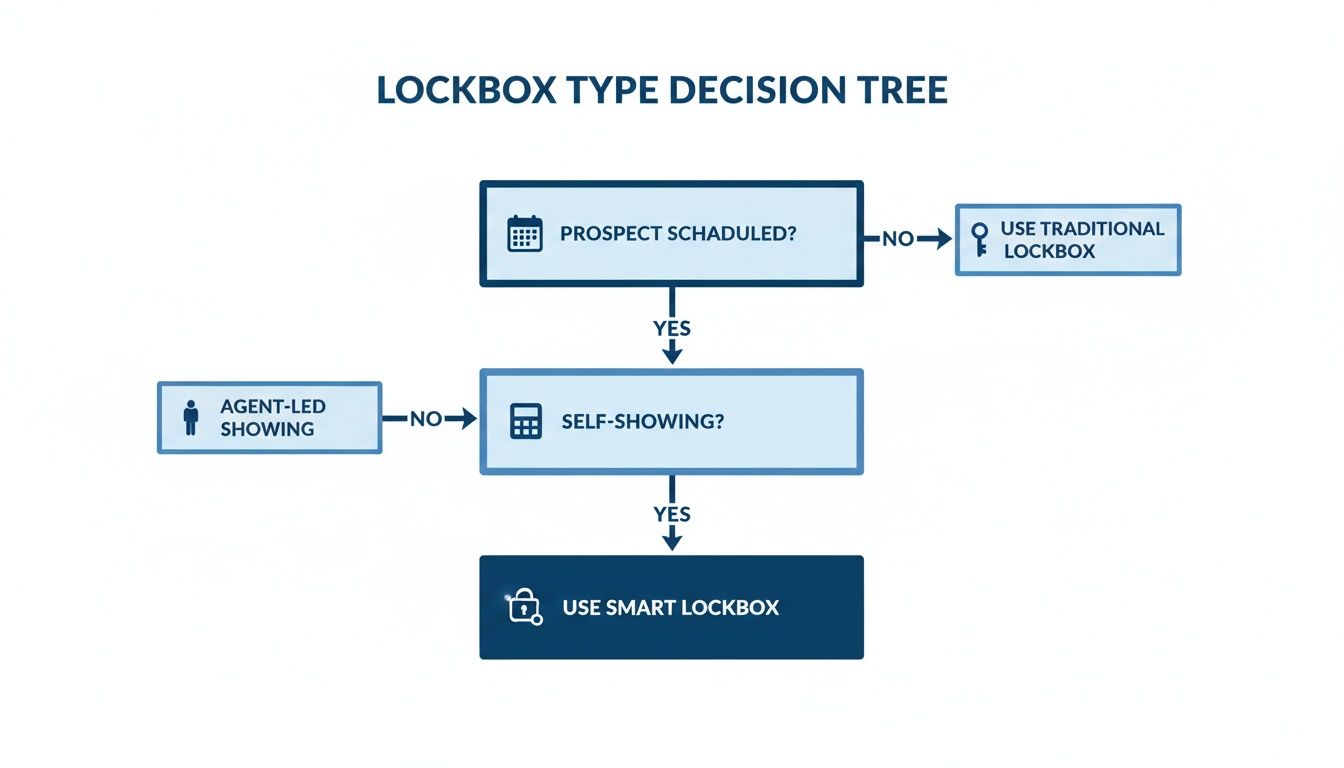
As you can see, the moment you aim to offer self-tours to reduce DOM, a smart lockbox isn't just an option—it's essential for providing secure, trackable, and scalable access.
The ability to generate unique, time-sensitive access codes from a central dashboard is a game-changer. A prospect books a tour, and your system automatically generates a code that works only for their scheduled 30-minute window. For large portfolios, the impact is immense:
- Eliminate Physical Trips: Grant, revoke, and monitor access to hundreds of properties from a single interface, saving thousands in labor and travel costs.
- Mitigate Risk with Audit Trails: Every entry is logged with a timestamp. This creates an undeniable record of who was on-site and when, which is invaluable for security, liability management, and operational oversight.
- Accelerate Speed-to-Lease: Offering instant, on-demand tours is a primary driver of lead-to-tour conversion. In a competitive rental market, speed wins the lease.
Operational Cost Analysis: Mechanical vs. Electronic Lockboxes
When managing hundreds or thousands of units, the total cost of ownership extends far beyond the hardware price. This table breaks down the real-world operational impact on a large portfolio.
FeatureMechanical LockboxesElectronic/Smart LockboxesImpact on a 1,000+ Unit PortfolioCode ManagementManual, on-site visit requiredRemote, instant via softwareSaves thousands of hours in labor and travel time annually by eliminating physical trips for code changes.Upfront Hardware CostLow ($20-$50 per unit)Higher ($100-$250 per unit)The higher initial investment is offset by massive operational savings and reduced security-related expenses.Ongoing CostsLabor for trips, rekeying costs due to security leaksMonthly software fees (if applicable)Predictable SaaS fees are significantly lower and more manageable than unpredictable labor and rekeying costs.Access LoggingNoneDetailed, real-time audit trailsProvides critical liability protection and operational oversight impossible with mechanical boxes.Security RiskHigh (static, easily shared codes)Low (unique, time-sensitive codes)Drastically reduces risk of unauthorized access and property damage, potentially lowering insurance premiums.Speed to LeaseSlower (dependent on agent availability)Faster (enables 24/7 self-showing)Reduces vacancy by days or even weeks per unit, directly boosting rental income across the portfolio.Integration CapabilityNoneHigh (APIs for PMS, leasing automation)Creates a seamless, automated workflow from lead to lease, increasing team efficiency and reducing data entry.
The data is clear: while mechanical lockboxes have a lower upfront cost, their hidden labor costs and security vulnerabilities create a massive financial and operational drag at scale. A switch to smart lockboxes is a strategic investment in operational efficiency, risk management, and revenue growth.
How Smart Lockboxes Fuel Leasing Automation
Smart lockboxes are more than secure key holders; they are the physical endpoint of a modern, automated leasing engine. For property managers overseeing hundreds or thousands of units, these devices are the linchpin for scaling operations without scaling headcount. They transform the traditional, agent-dependent showing process into a streamlined, data-driven machine.
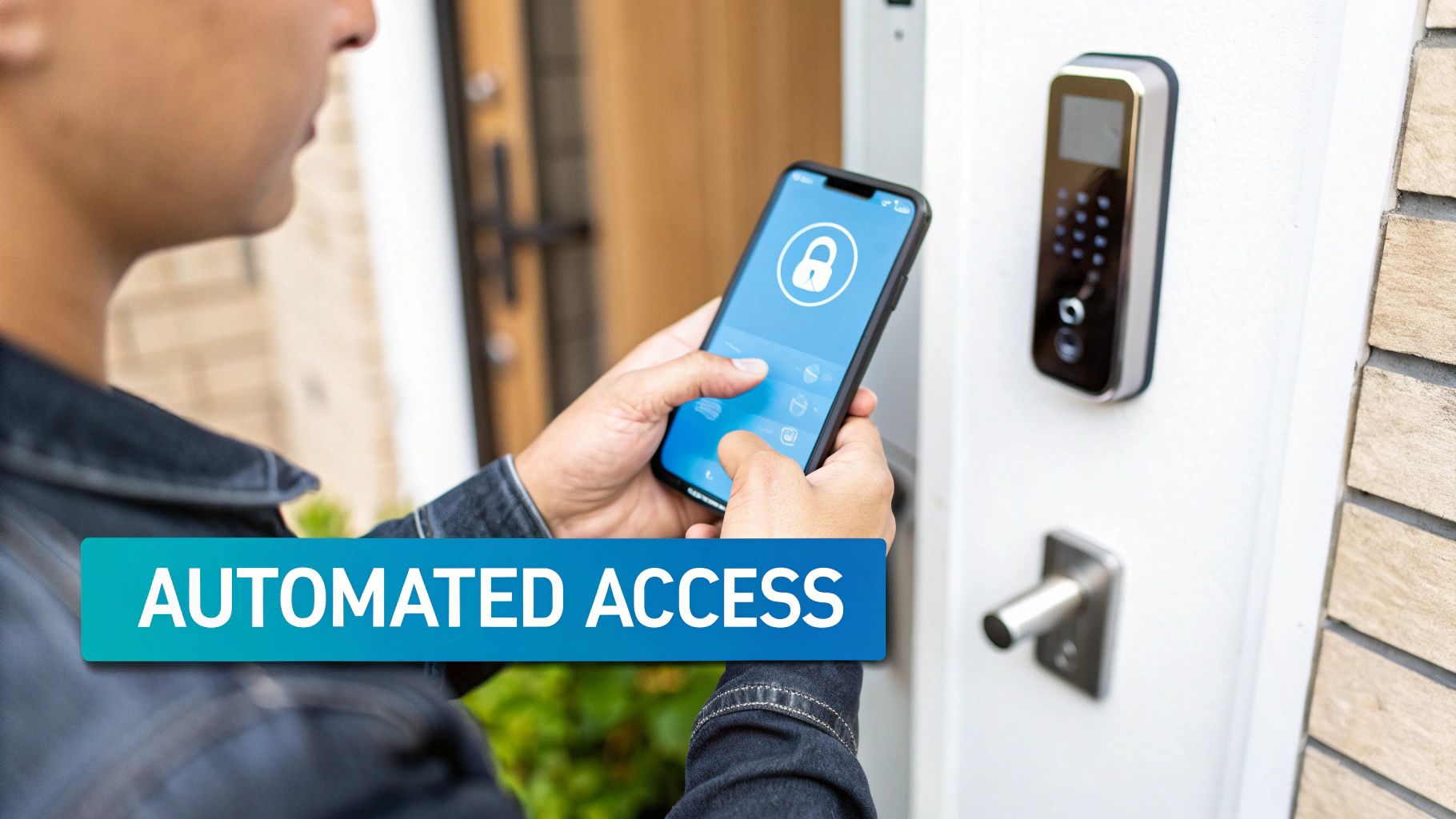
This transformation is enabled by cellular and Bluetooth connectivity, which allows the lockbox to communicate in real-time with your central leasing platform. This constant dialogue between the hardware on the door and the software in your office is what unlocks true leasing automation.
Real-Time Communication and Control
A smart lockbox's primary function is to execute commands and report data instantly. This real-time link is the foundation for automating the prospect journey, from the moment they view a listing to the second they step inside for a tour.
Here’s how this automated workflow directly impacts key leasing metrics:
- Instant Scheduling: A qualified lead finds your property online and books a tour for 3:00 PM. Your leasing platform instantly confirms the slot—eliminating phone tag and email delays.
- Automated Code Generation: The system then generates a unique, single-use access code valid only for their scheduled 30-minute window.
- Seamless Prospect Experience: The code and instructions are delivered directly to their smartphone. This on-demand experience meets modern renter expectations and prevents hot leads from going cold while waiting for an agent.
This frictionless process is a powerful driver for improving your lead-to-tour conversion rates. You engage prospects at the peak of their interest, before they move on to the next listing.
From Convenience to Critical Data
While automated access provides convenience, the real value for large-scale operators is in the data. Every interaction with the lockbox is logged, creating a detailed audit trail that provides unparalleled insight into your leasing operations.
A smart lockbox doesn’t just open a door; it opens a window into your leasing performance. The automated access logs are a goldmine of actionable data, providing concrete security records and revealing leasing patterns that are impossible to track with manual methods.
This data-rich environment transforms portfolio management. You can now:
- Verify Showing Activity: Know precisely when prospects arrive and depart, confirming tour completion without requiring an agent on-site.
- Identify No-Shows: Instantly flag booked tours that didn't occur, triggering automated follow-ups to re-engage the lead.
- Optimize Showing Availability: Analyze data across your portfolio to identify peak tour times and adjust availability to maximize lead conversion.
- Enhance Security: Maintain a complete, time-stamped log of every entry, providing a rock-solid security record for every vacant unit.
The market is rapidly adopting this technology. The global smart lock market is projected to reach USD 8.13 billion by 2030, growing at a CAGR of 19.7%. This growth reflects a major shift in how businesses manage access—demanding smarter, connected solutions that offer superior control and visibility. For property managers, this is the foundation for building a more efficient, scalable, and profitable leasing operation.
Deploying a Lockbox System Across Your Portfolio
Implementing a smart lockbox system across a large portfolio is a significant operational upgrade. For operations directors, a well-planned, phased rollout is critical to avoid creating process gaps, security risks, or team frustration. A strategic deployment ensures the new system drives efficiency, reduces Days on Market (DOM), and delivers a clear return on investment.
Stage 1: Portfolio Audit and Prioritization
Before purchasing hardware, conduct a data-driven audit of your portfolio to identify properties that will yield the highest immediate ROI from automated showings.
Analyze your data to identify:
- High Vacancy Units: Target properties with the longest DOM. Implementing on-demand showings here can immediately accelerate leasing and restore cash flow.
- Geographically Scattered Properties: Prioritize units that consume the most agent travel time. Automating access provides an instant reduction in operational costs and wasted hours.
- High Lead Volume Properties: Focus on units that receive many inquiries but have low tour-to-lead conversion rates, suggesting a scheduling bottleneck that smart lockboxes can solve directly.
This data-first approach ensures your initial investment is directed where it will have the most significant financial impact.
Stage 2: Platform Selection and Integration
The lockbox hardware is only one component; the management software is what enables scale. For enterprise-level operators, this platform must integrate seamlessly with your existing tech stack. Your lockbox system should function as an extension of your property management software (PMS), not a siloed tool.
Key evaluation criteria include:
- PMS Integration: A robust, two-way API integration with your core software (AppFolio, Yardi, RentManager) is non-negotiable. This automates data sync and eliminates manual entry.
- Network Reliability: For a distributed portfolio, cellular connectivity is often the most reliable option, ensuring lockboxes remain online even when property Wi-Fi is unavailable.
- Scalability and Support: Partner with a provider that has a proven track record of supporting large-scale deployments and offers enterprise-grade customer support.
Stage 3: SOP Development and Access Policies
Standard Operating Procedures (SOPs) are the foundation of a scalable and secure system. Without clear, documented protocols, you risk inconsistent implementation, security vulnerabilities, and operational chaos across different markets.
The success of a scaled lockbox deployment hinges on creating airtight protocols for every step of the process. From installation standards to low-battery alert responses, standardization is key to maintaining control and efficiency across a distributed portfolio.
Develop detailed guidelines for:
- Installation: Create a standardized checklist for lockbox placement and installation to ensure consistency and prevent property damage.
- Code Management: Enforce strict access code policies. Prospect codes should be single-use and valid for a 30-minute window. Vendor codes might be valid for 24 hours, but should expire automatically.
- Maintenance: Establish a proactive maintenance schedule for physical checks and a clear protocol for responding to automated low-battery alerts.
Stage 4: Team Training and Rollout
A new system is only effective if your team is trained to use it properly. Leasing agents, maintenance coordinators, and vendors must all understand and adopt the new workflow. The goal is to empower your team to leverage technology to work more efficiently.
Your training plan should include:
- Hands-On Workshops: Conduct virtual or in-person sessions to walk teams through the software, focusing on core tasks like issuing codes and reviewing activity logs.
- Workflow Documentation: Create concise guides and short video tutorials as a resource for ongoing reference.
- Phased Rollout: Begin with a pilot program in a single market. Gather feedback and refine your SOPs before deploying the system across the entire portfolio.
This four-stage framework enables a smooth transition, turning a complex logistical challenge into a powerful competitive advantage that reduces vacancy and drives revenue growth.
Weaving Lockboxes into Your Leasing Platform
A smart lockbox becomes exponentially more powerful when it's integrated with your central leasing and property management software via an API. For property managers operating at scale, this integration transforms disparate pieces of hardware into a cohesive, automated showing system.
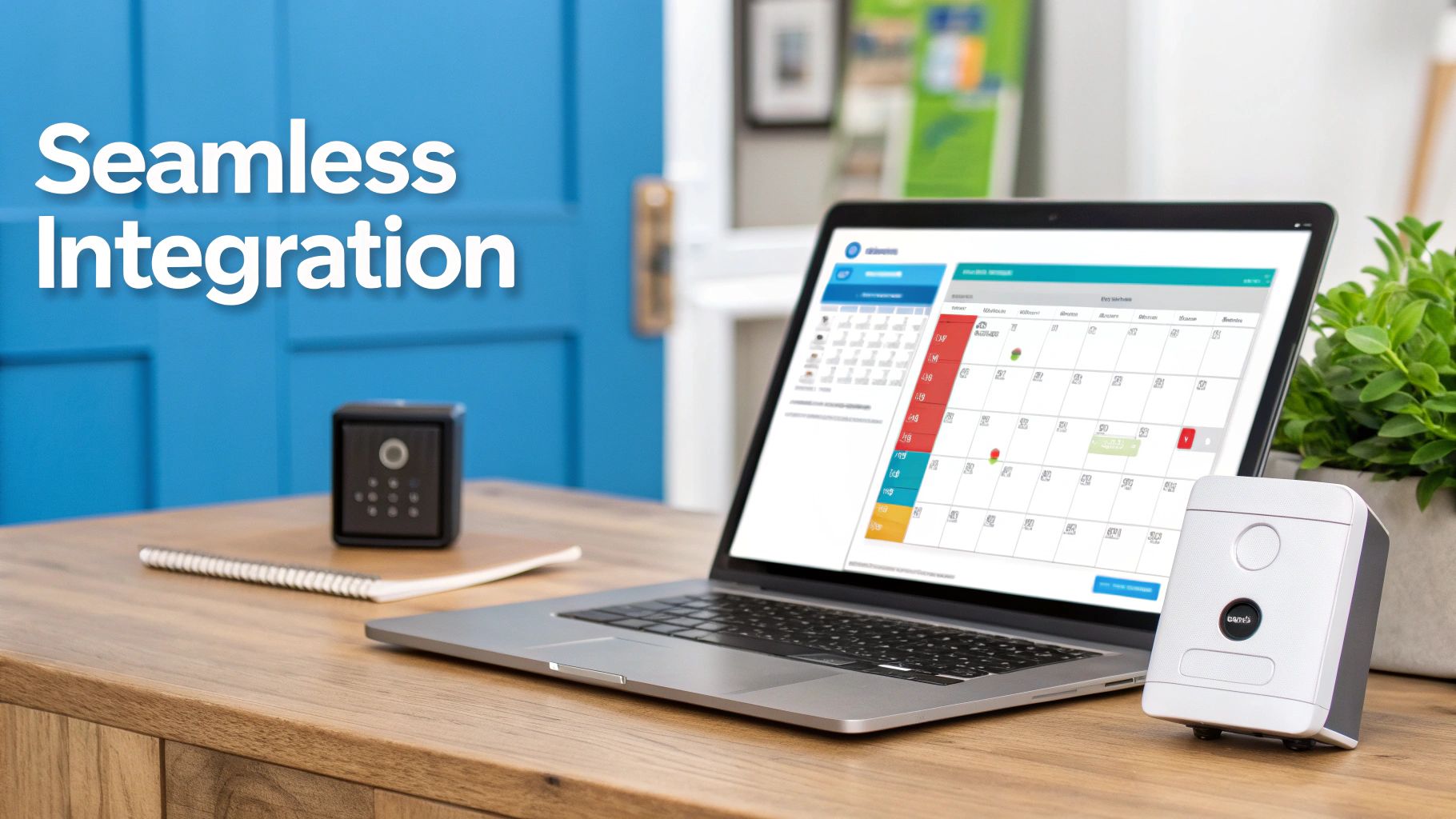
This connection is the key to creating a true top-of-funnel leasing machine that operates with minimal human intervention. It’s how the most efficient operators manage showings across vast, distributed portfolios without proportionally increasing their payroll.
The Perfect Automated Showing Workflow
The ultimate goal is a frictionless prospect journey that directly increases lead-to-tour conversion rates and shrinks Days on Market (DOM). A fully integrated system runs this process on a continuous, 24/7 loop.
Here’s the ideal automated workflow:
- Prospect Initiates Tour: A potential renter selects an available tour time from your online listing.
- System Verifies Identity: The leasing platform automatically performs an identity verification check—a critical security step that runs seamlessly in the background.
- System Generates Code: Upon verification, the platform communicates with the lockbox to generate a unique, single-use access code valid only for the scheduled tour.
- Prospect Receives Access: The code and instructions are sent directly to the prospect’s smartphone via SMS or email, delivering the on-demand experience modern renters crave.
This initial automation eliminates the manual scheduling friction that causes lead drop-off. But the integration's value extends beyond the start of the tour.
Closing the Loop After the Tour
An integrated system also automates the follow-up process, which is critical for converting a showing into an application.
The system should automatically:
- Log the Visit: The moment the code is used, the system logs the entry and exit times, providing a verifiable record that the tour occurred.
- Request Feedback: Immediately after the tour window closes, an automated message is sent to solicit feedback while the property is top-of-mind.
- Update Lead Status: The prospect's status in your PMS automatically updates from "Showing Scheduled" to "Tour Completed," ensuring your leasing pipeline data is always accurate.
By connecting lockbox hardware directly to your core leasing and property management software, you create a powerful, self-sustaining ecosystem. This automation doesn't just save time—it provides the data-driven insights needed to optimize your entire leasing funnel, from initial inquiry to signed lease.
The broader market for lockbox services, including both hardware and software, is projected to reach USD 11.8 billion by 2035. This growth is driven by businesses replacing outdated manual processes with integrated digital platforms that deliver superior efficiency and control. You can explore the full market research report to understand the trend. For property managers, this level of integration is essential for optimizing operations and maximizing revenue across every door in the portfolio.
Managing Security and Liability at Scale
For large portfolios, operational efficiency cannot compromise security. Smart lockboxes are a powerful tool for reducing Days on Market, but they must be supported by a robust risk management framework. The objective is to leverage automation to make properties more secure, not less.
The foundational rule is to eliminate static, reusable codes. Best-in-class security relies on generating a unique, time-sensitive code for every individual access event—from a prospect tour to a vendor maintenance call.
Enforcing Strict Access Protocols
Human error is often the weakest link in security. A shared code or a forgotten expiration date can create significant risk. An enterprise-grade lockbox system mitigates this by enforcing strict access rules automatically, removing the burden from your team.
Best practices include:
- One-Time Use Codes for Prospects: Every self-tour should generate a new code that expires immediately after the viewing window. This prevents unauthorized re-entry and code sharing.
- Time-Bound Vendor Access: When a work order is created, issue a vendor code that is only valid for a specific, limited duration, such as 24 hours. The code automatically deactivates afterward.
- Automated Identity Verification: Integrate an automated ID check into the tour scheduling process. This simple pre-screening step acts as a powerful deterrent and adds a critical layer of security.
Implementing these automated controls is fundamental to operating the most secure self-showings and protecting your assets.
By baking automated, time-sensitive code generation into your leasing workflow, you turn your lockboxes from simple key holders into an intelligent access control system. You get iron-clad security and a perfect, indisputable paper trail for every property.
The Power of Automated Audit Logs
Beyond preventing unauthorized access, digital audit logs are a critical tool for liability management. In the event of a dispute—such as a claim of property damage or unauthorized entry—a detailed, time-stamped log provides irrefutable evidence.
This automated record-keeping demonstrates due diligence and provides a clear, factual account of who was on the property and when. This data is invaluable for resolving disputes, supporting insurance claims, and protecting your company from false accusations. For portfolios with hundreds or thousands of units, this level of automated oversight is not just a feature; it's a core component of enterprise risk management.
Common Questions About Lockbox Operations
When deploying lockboxes across a large portfolio, several practical questions inevitably arise. Here are the answers to the most common operational challenges property managers face.
How Do You Keep Track of Batteries for Hundreds of Lockboxes?
A dead lockbox battery can derail a scheduled showing and result in a lost lead. Proactive management is essential.
Leading smart lockbox platforms provide automated low-battery alerts directly within the management dashboard. This allows your team to schedule battery replacements during routine property visits, preventing emergency trips and ensuring showings are never disrupted. This simple, automated system prevents lost leasing opportunities and improves operational efficiency.
What’s the Safest Way to Give Vendors Access?
Static, reusable codes are a significant security risk. Best practice is to eliminate them entirely for vendor access.
Instead, issue temporary, role-based access codes that expire automatically. When a work order is created in your system for a plumber, for instance, a unique code should be generated that is only valid for the next 24 hours. This mitigates the risk of unauthorized use and provides a complete digital audit trail of all vendor activity.
How Does Lockbox Showing Data Sync with My Property Management Software?
Seamless integration is crucial for operational efficiency. A robust smart lockbox system will connect directly with major Property Management Software (PMS) like AppFolio or Yardi via an API.
This creates a two-way data sync. When a prospect completes a tour, the showing data—such as entry and exit times—is automatically pushed to that lead's record in your PMS, eliminating manual data entry. This provides a single source of truth and a complete, real-time view of your leasing pipeline.
Ready to slash your Days on Market and put your showing operations on autopilot? Showdigs provides the enterprise-grade self-showing technology and on-demand agent network designed to help large-scale property managers reduce vacancy and optimize leasing operations. Discover how our platform can transform your leasing cycle by visiting https://showdigs.com.
.png)