



Discovering an unauthorized person in a vacant unit is more than just a security issue; it's a direct threat to your portfolio's financial performance. For every day a unit is illegally occupied, your Days on Market (DOM) metric deteriorates, and your revenue per door takes a hit. This isn't a minor inconvenience—it's a critical operational failure that demands an immediate, systematic response.
Your team's first instinct might be to confront the individual, but this is a critical error that can escalate the situation and introduce unnecessary risk. The first step in any scalable operational framework is to assess the situation from a safe distance, avoid direct engagement, and initiate a documented, legally compliant process. A misstep in the first 24 hours can turn a simple trespass case into a protracted legal battle that inflates vacancy costs for months.
Your Immediate Response to an Unauthorized Occupant

The Critical Mistake to Avoid
The most important initial action is counterintuitive: do nothing that could be construed as a "self-help" eviction. These illegal actions can instantly flip the legal script, turning a straightforward trespassing issue into a costly lawsuit where your company is the defendant.
What constitutes a self-help eviction?
- Changing the locks to deny access.
- Shutting off utilities like water, gas, or electricity.
- Removing their belongings from the property.
- Using threats or intimidation to force them to leave.
Any of these actions can grant the squatter legal standing against you. A judge could rule in their favor, forcing you to restart the entire eviction process from square one and significantly increasing your vacancy loss.
Contact Law Enforcement Immediately
Once you've confirmed an unauthorized occupancy and ensured your team's safety, your first operational step is to contact the police. The objective is to establish an official record of the incident from the outset.
When officers arrive, the framing is critical. You are not reporting a landlord-tenant dispute. You are reporting a criminal trespass. It must be made unequivocally clear that the individual has no lease, has never paid rent, and has zero authorization to be on the property.
This distinction is more vital now than ever. States like Florida and Texas have recently passed new anti-squatter laws that empower law enforcement to remove individuals who are clearly not tenants. In many jurisdictions, these laws allow for on-the-spot removal if the property owner or manager signs a sworn affidavit.
Filing a police report immediately accomplishes several key operational goals:
- Creates a Timestamp: It officially documents the date and time of discovery and reporting, which is crucial for legal proceedings.
- Provides Legal Documentation: The police report becomes Exhibit A in any subsequent court action.
- Potential for Immediate Removal: In states with favorable laws, this initial call can resolve the issue without the need for a formal eviction, dramatically reducing DOM and associated revenue loss.
Impeccable documentation is the cornerstone of scalable property management. Just as you rely on a detailed step-by-step guide to tenant eviction for holdover tenants, you need ironclad evidence to protect the asset in a squatter scenario. That initial trespass report is the foundational document. Ensure you obtain the report number for your records—a simple step that protects the owner's investment and mitigates vacancy costs.
Squatter vs. Holdover Tenant: A Critical Distinction for Portfolio Managers
For property management companies managing hundreds or thousands of units, misclassifying an unauthorized occupant isn't a minor administrative error—it's a significant operational misstep that directly impacts revenue. Initiating the wrong legal process can lead to case dismissal, forcing your team to start over and adding weeks, or even months, to your Days on Market (DOM).
Calculating the financial impact is simple: if a unit's market rent is $2,000/month, every extra day of vacancy costs approximately $67. Across a large portfolio, these delays compound into substantial revenue loss. Nailing the occupant's classification on day one is therefore the most critical step toward a swift, cost-effective resolution.
The distinction is legally profound. A squatter is an individual who occupied a property without any permission. They never signed a lease, were never provided keys, and have no prior legal relationship with the property owner.
A holdover tenant, conversely, is a former tenant. They had a legal right to occupy the property under a lease that has since expired or been terminated, but they have refused to vacate. Their prior lawful tenancy affords them different legal protections than a trespasser.
Common Scenarios Encountered in the Field
Standardizing your team's response to these common situations is key to operational efficiency.
- The Fake Lease Scam: An individual presents a counterfeit lease, claiming they rented the unit from a scammer online. Your records show no such tenancy. This person is a squatter.
- The Friend Who Stayed Behind: A legitimate tenant vacates but leaves behind a friend or relative who was never on the lease. This new occupant has no contractual agreement with you and is a squatter.
- The Obvious Break-In: The most clear-cut case where an individual forces entry into a vacant unit. They are a criminal trespasser and, legally, a squatter.
In contrast, a holdover tenant scenario is typically a tenant whose lease has ended, proper notice was given, and they have failed to move out. Despite their non-payment and lack of a current lease, their initial lawful entry necessitates following the standard tenant eviction process.
The core operational question is: "Did this person ever have a legal agreement with us to occupy this specific unit?" A "no" means you are dealing with a squatter. A "yes" indicates a holdover tenant.
Why the Legal Path Determines Your Timeline and Cost
Choosing the wrong legal path is an unforced error that can double or triple your vacancy costs for that unit. Treating a squatter like a tenant introduces unnecessary procedural delays, while treating a holdover tenant like a trespasser will result in immediate case dismissal.
To help your team avoid these costly mistakes, it's crucial to understand the practical differences in how you must handle each situation.
Squatter vs. Holdover Tenant: Key Operational Differences
This table breaks down the critical distinctions that dictate your immediate next steps. Getting this right saves you from legal headaches and lost revenue down the road.
For portfolio managers, every day a unit is illegally occupied is a direct hit to the bottom line. Correctly identifying the occupant from the get-go ensures you deploy the right legal strategy immediately, cutting down your DOM and protecting your asset.
Navigating the Legal Eviction Process for Squatters
When calling law enforcement doesn’t result in an immediate removal, it's time to pivot to the formal court process. This is typically known as an unlawful detainer action, and for anyone managing a large portfolio, running this play flawlessly is a matter of pure operational discipline.
One tiny misstep—a missed deadline or a wrong form—can get your case thrown out, forcing you to start the clock all over again. Every single day a squatter occupies a unit, your Days on Market (DOM) ticks up and your revenue takes a direct hit. A meticulous, standardized approach isn't just best practice; it's non-negotiable for protecting your assets at scale. This is about reclaiming a revenue-generating unit and getting it back into your inventory as efficiently as humanly possible.
Kicking Off the Unlawful Detainer Lawsuit
The first official move is serving the squatter with the correct legal notice. This is almost always a Notice to Quit, a formal demand for them to vacate the property within a specific timeframe set by state law—often just a matter of days.
Precision is everything here. Using the wrong notice or failing to serve it exactly as the law requires is one of the most common—and costly—mistakes a property manager can make.
Once that notice period expires and the squatter is still there, you file the unlawful detainer lawsuit with the court. This is the action that officially gets the eviction process rolling. Your operations have to be ready to handle this filing quickly and accurately, no matter which jurisdiction you're in.
Assembling an Airtight Case File
Your success in court comes down to one thing: documentation. Your legal team needs a comprehensive file that leaves zero doubt about the occupant's lack of a legal right to be there. This is where your diligent record-keeping pays off big time.
Your checklist of essential documents should look something like this:
- Proof of Ownership: A clean copy of the property deed or title.
- The Police Report: The trespass report you filed the moment you discovered the squatter.
- Photo/Video Evidence: Dated pictures or videos showing the unauthorized occupancy, any signs of forced entry, or property damage.
- Communication Logs: A record of every attempt to communicate, including proof that the Notice to Quit was served properly.
- Witness Statements: If you have them, signed statements from neighbors or staff who can verify when the unauthorized occupation began.
A meticulously organized case file is the foundation of a swift legal victory. It demonstrates professionalism to the court and undermines any potential claims the squatter might attempt to make. In property management, the team with the best records almost always wins.
The good news is the legal landscape is shifting in your favor. According to the National Rental Home Council, Florida's recently passed House Bill 621 allows property owners to request immediate removal of squatters by law enforcement, bypassing the lengthy court process entirely. Similar legislative efforts are underway nationwide, making it even more critical to correctly identify the occupant and leverage the fastest legal path available.
From Courtroom to Writ of Possession
After you file the lawsuit, the squatter will be served with a summons and complaint, which gives them a chance to respond. If they ignore it, you’ll likely win by default. If they do respond, a court date is set. At the hearing, you or your attorney will present that rock-solid case file to the judge.
When the court rules in your favor, it issues a judgment and a writ of possession. This is the golden ticket—the official court order that authorizes law enforcement to physically remove the squatter from your property. This document is the legal key to reclaiming your asset and finally getting it back on the market.
While the process for removing a squatter has its own quirks, understanding the fundamentals in a step-by-step guide to tenant eviction is a solid foundation. For managers navigating even more complex situations, our guide on managing COVID-occupied rental units also offers valuable strategies for tough legal and logistical scenarios. Building this knowledge base creates a more resilient operational framework for any portfolio.
Coordinating With Law Enforcement for the Final Removal
You’ve successfully navigated the court system and obtained the critical document: a writ of possession. This court order is your legal authority to reclaim the property. However, it is not a license for your team to perform the removal. The final, most sensitive step is coordinating with local law enforcement to execute the physical removal in a lawful and efficient manner.
For multi-market property management companies, standardizing this handoff is crucial. A poorly executed lockout can create new legal liabilities, cause further delays, and negate the efficiency gains you've fought for in court.
This flowchart lays out the legal journey that gets you to this point.
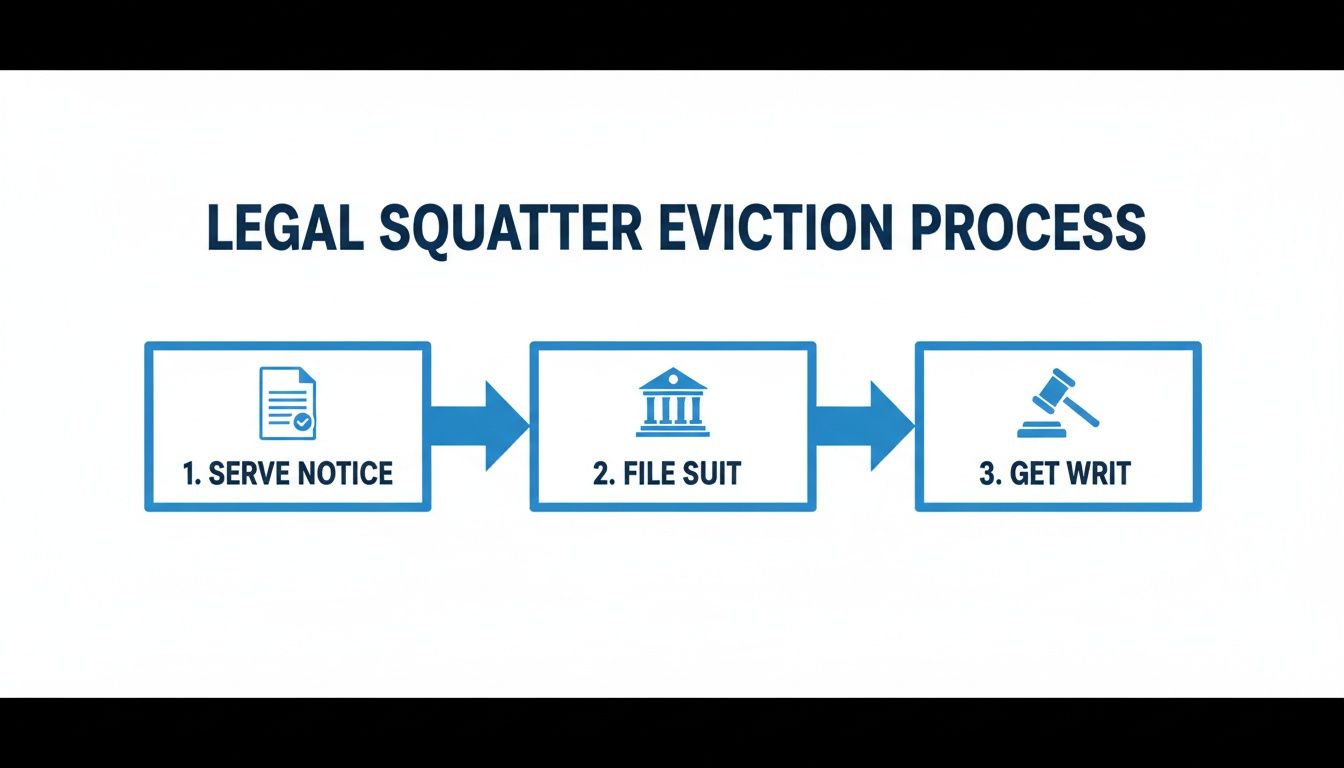
As you can see, obtaining the writ is the final legal hurdle before you can engage law enforcement to finalize the process.
Scheduling the Lockout
With the writ of possession in hand, you must deliver it to the appropriate law enforcement agency—typically the sheriff's or marshal's department. Each jurisdiction has unique protocols, fee structures, and scheduling processes. Your first action should be to contact their civil process division to determine their exact requirements.
Be prepared for scheduling delays. These agencies are often backlogged, and it may take several days or weeks to get on their calendar. This operational reality underscores the importance of expediting the preceding legal stages. Document every communication and secure a confirmed date and time in writing.
Your Role and Responsibilities on Eviction Day
On the scheduled day, law enforcement's role is strictly to keep the peace and ensure the squatter vacates as ordered. They will not assist with removing belongings or securing the property. Those responsibilities fall entirely to your team and your vendors.
To ensure a seamless execution, follow this operational checklist:
- Be On-Site and On Time: Arrive at the property before the scheduled time. A tardy arrival may result in the officers leaving, forcing you to reschedule and incur further delays.
- Have a Locksmith Ready: This is non-negotiable. A locksmith must be on-site, ready to change all exterior locks the moment the property is cleared. Securing the asset immediately is paramount.
- Plan for Personal Property: Squatters often leave belongings behind. You cannot legally dispose of them immediately. State and local laws dictate the handling of abandoned property, which typically involves storing items for a specified period and providing formal notice. Develop this plan before eviction day to avoid subsequent legal action.
The lockout is the final operational hurdle. The goal is to regain legal possession, secure the asset against re-entry, and initiate the make-ready process to minimize vacancy. Smooth coordination with law enforcement and your vendors is what separates a quick resolution from another costly delay.
Proactive Measures to Protect Your Portfolio from Squatters

Reacting to a squatter is a costly, time-consuming drain on your operations that ties up your team and bleeds revenue from your portfolio every single day. The most effective strategy isn't a faster eviction—it's preventing the unauthorized occupancy from ever occurring.
This requires a shift from a reactive to a proactive security posture. For property managers with large, distributed portfolios, this means deploying scalable technology and airtight operational procedures to harden every vacant asset. This isn't just about mitigating legal risk; it's about directly supporting your most important KPI: minimizing vacancy loss and reducing DOM.
Fortifying Vacant Assets at Scale
Your first line of defense is physical security, implemented systematically across your entire portfolio. A single lapse in protocol can create an opportunity for squatters.
Every vacant property should be secured with a standardized protocol. At a minimum, this includes:
- Robust Locking Systems: Upgrade from basic locks to high-quality deadbolts and smart lock systems that allow for remote access control and auditing.
- Visible Deterrents: Simple measures have a significant impact. Post clear "No Trespassing" signs and maintain the property's appearance to signal that it is actively managed.
- Regular Inspections: Implement a mandatory schedule for property checks. A consistent physical presence is a powerful deterrent and enables early detection of suspicious activity.
These steps are foundational. But to truly secure your portfolio, your leasing operations need to become an active part of your security strategy.
Transforming Leasing Operations into Proactive Security
Modern leasing automation platforms do far more than just schedule tours. They create an undeniable, auditable chain of custody for every single person who steps foot on your property. This digital paper trail is one of the strongest tools you have against squatting.
When you automate and track every interaction—from a prospect’s self-tour to a vendor’s quick maintenance stop—you close the security gaps that manual processes leave wide open. Every entry gets logged with a name, a timestamp, and a clear purpose.
This approach turns your leasing tech from a simple convenience tool into a powerful access control system. When you can instantly pull a detailed log of who entered a property and when, you have the irrefutable evidence needed to prove criminal trespass, not a messy civil dispute.
This level of documentation is often the deciding factor in how law enforcement handles your initial call. It gives them the confidence to act decisively rather than deferring the matter to the civil courts.
Leveraging Technology for Prevention and Proof
The scale of informal occupation worldwide is staggering. UN-linked estimates suggest up to 1.1 billion people live in informal settlements. While the specifics differ, this global trend trickles down to tight U.S. rental markets, increasing encounters with unauthorized occupants. For managers, this raises the burden of proof, demanding crystal-clear documentation to differentiate trespassers from tenants. Platforms that automate access logs give you the hard evidence to show exactly who was approved to be on-site and when. You can discover more insights about these global housing trends to see the bigger picture.
This is where the right technology provides a significant competitive advantage. An automated system serves as both a deterrent and your best source of evidence:
- Instant Notifications: Receive real-time alerts for any unscheduled or unauthorized access attempts.
- Digital Access Logs: Maintain a permanent, immutable record of every entry—a powerful asset in any legal proceeding.
- Comprehensive Reporting: Just as you rely on detailed move-in condition reports to protect against damage claims, access reports provide the same level of protection against fraudulent occupancy claims.
By integrating technology into your leasing process, you build a digital fortress around your vacant inventory. This proactive approach not only reduces squatter risk but also reinforces an operational model designed for efficiency, security, and maximizing revenue for every unit under management.
Frequently Asked Questions About Squatter Evictions
Even for seasoned property management professionals, a squatter situation introduces unique legal and logistical complexities. A misstep can lead to significant delays, escalating costs, and legal exposure. Here are answers to some of the most common questions from large-scale operators.
What Is Adverse Possession and Should I Be Worried About It?
"Squatter's rights" is a colloquial term for the legal doctrine of adverse possession. This principle allows an individual who occupies a property without permission for an extended, uninterrupted period to potentially claim legal ownership. This period is substantial—typically between 7 and 20 years, depending on state law.
For an actively managed rental portfolio, a successful adverse possession claim is virtually impossible.
The requirements for a valid claim are stringent. The squatter’s possession must be:
- Hostile: Without the owner's permission.
- Actual: They are physically residing in the unit.
- Open and Notorious: Their presence is obvious, not concealed.
- Exclusive and Continuous: They have sole, uninterrupted control for the entire statutory period.
Your standard operating procedures—such as routine inspections, maintenance, and immediate legal action upon discovery—decisively break the "continuous" element required for a claim. The operational challenge is not losing the property in a decade; it's the immediate revenue loss from the current illegal occupancy.
Can I Accept Money From a Squatter to Cover Damages or Rent?
Under no circumstances. This is a critical error that will completely undermine your legal position.
The moment you accept any form of payment, a court can rule that you have established an implied landlord-tenant relationship, even without a written lease. The squatter is then legally reclassified as a tenant-at-will, granting them the full range of tenant protections.
By accepting even a single dollar, you forfeit the ability to use expedited squatter removal procedures. You will be forced to start over with a standard tenant eviction, a process that is invariably longer and more costly, further increasing your DOM.
What Should I Do With Personal Belongings a Squatter Leaves Behind?
Once law enforcement has removed the squatter, your legal obligations continue. You are responsible for any personal property left in the unit. You cannot simply discard it.
Most states have specific statutes governing abandoned property that apply even in squatter scenarios. Failure to comply can result in a lawsuit for the value of the disposed items.
The typical process involves:
- Secure Storage: Relocate the items to a secure location.
- Written Notice: Send a formal notice to the individual's last known address, detailing the items and storage location.
- Reasonable Deadline: The notice must provide a clear deadline for retrieval, often 15 to 30 days.
- Lawful Disposal: Only after the deadline expires can you legally dispose of the property, which may involve selling or discarding it per state law.
This area is legally complex. Always consult with your legal counsel to ensure compliance with local and state regulations.
Is It Worth Trying a Cash for Keys Deal With a Squatter?
"Cash for keys"—offering a squatter a financial incentive to vacate peacefully—is a high-risk, high-reward tactic.
On one hand, it can be the fastest and most cost-effective solution, allowing you to avoid a protracted court battle and minimize vacancy loss. On the other hand, you are negotiating with an individual who has no legal right to be there. The offer could backfire if they take the money and refuse to leave, or if the offer is used against you in court as tacit acknowledgment of their occupancy right.
If you consider this option, it is imperative to have legal counsel draft an ironclad agreement. The document must explicitly state that the payment is not rent, does not create a tenancy, and is solely for the purpose of regaining possession of the property. Never transfer funds until the individual has completely vacated and you have secured the keys.
A proactive strategy is your best defense. Showdigs provides leasing automation tools that create a clear, auditable trail for every property visit, hardening your vacant units against unauthorized access. By tracking every showing and entry, you not only deter squatters but also build the evidence needed to act decisively if an incident occurs, reducing both your risk and your Days on Market.
Learn more about how Showdigs secures your portfolio at showdigs.com
.png)