3 Key Takeaways
- AI tenant verification protects vacant properties during self-showings by confirming a prospect’s identity before granting access, replacing the security gap that exists when properties are accessed without a human present.
- The distinction between AI-powered identity verification and basic phone verification matters significantly. Verifying a phone number confirms a device exists. Verifying a face confirms a real person is who they claim to be.
- Self-showing with AI verification is now the most efficient showing format for many property types, allowing prospects to access properties on their own schedule while giving property managers the security layer that makes unaccompanied access responsible.
.png)
What Is AI Tenant Verification in Leasing Software?
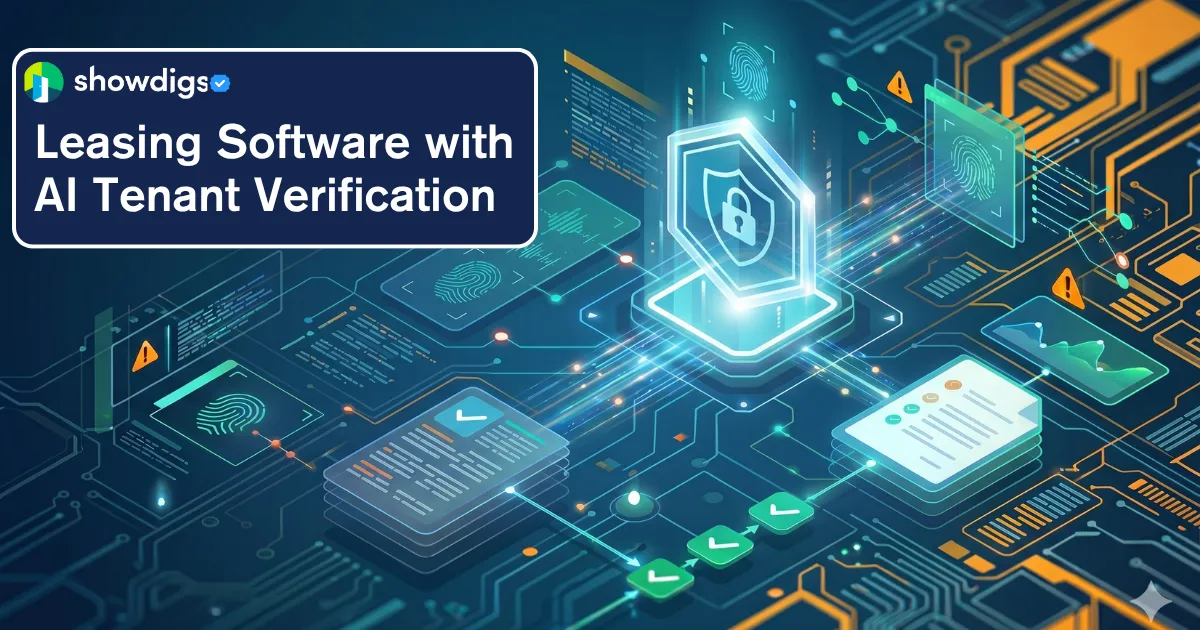
AI tenant verification is a security process built into self-showing leasing software that confirms a prospect’s identity before granting them access to a vacant property. Instead of relying on a property manager or showing agent to be physically present, the software verifies who the prospect is, confirms they have been pre-screened, and only then unlocks access to the property.
The most basic forms of verification check that a phone number is real and belongs to the person who registered it. More advanced AI-powered verification goes further, confirming that the person requesting access matches the identity they provided through facial recognition or document verification technology.
The distinction matters because the security risk in self-showings is not usually a bad actor using their real phone number. It is someone misrepresenting who they are. Phone verification does not address that risk. Facial AI verification does.
Why Self-Showing Security Matters
Self-showings have become one of the most common and efficient formats for rental property tours. Prospects can access a property on their own schedule without waiting for a showing appointment with a property manager or agent. Property managers can serve more prospects with fewer coordination hours. The showing happens faster and without the scheduling friction that costs leads.
The tradeoff is the security question. A vacant property with smart lock access and no human present is a different risk profile than a scheduled showing with an agent. Without proper verification, self-showings create potential for unauthorized access, property damage, and security incidents that are difficult to trace after the fact.
AI tenant verification addresses this directly. By confirming who is accessing a property before they enter, the system creates an accountability layer that makes self-showings safe to offer broadly across a portfolio without requiring a human to be present at every showing.
What AI Tenant Verification Actually Does
Pre-showing identity confirmation
Before a prospect receives access instructions or a lockbox code, the verification system confirms their identity. This typically involves submitting a government-issued ID and a selfie, which the AI cross-references to confirm the person requesting access is who they claim to be.
This step happens within the same digital flow as scheduling, so the prospect experience is streamlined. They schedule the showing, complete verification, and receive access instructions. The whole process takes a few minutes and happens from their phone before they ever leave for the property.
Showdigs describes this as verifying faces, not just phones, reflecting the difference between confirming a device and confirming a real identity.
Real-time access control
Once verification is complete, access to the property is granted for the scheduled showing window only. Smart locks or digital lockboxes release on arrival and re-secure after the showing window closes. Prospects cannot access the property outside of their scheduled window and each access event is logged with a timestamp.
If a prospect attempts to access a property outside their scheduled window or without completing verification, access is denied automatically. No human intervention required.
Audit trail and accountability
Every self-showing creates a complete record. The prospect’s verified identity, the time they accessed the property, how long they were inside, and any post-showing notes are all logged and accessible to the property manager. If an issue occurs after a showing, the identity of everyone who accessed the property is on record.
This accountability layer is what makes AI-verified self-showings appropriate for properties that previously would have required agent presence. The record exists whether or not anything goes wrong.
How Showdigs Handles Self-Showing Security
.png)
Showdigs’ self-showing security combines AI identity verification with smart lock access control in a single integrated flow. Here is what the process looks like from the prospect’s perspective and the property manager’s perspective.
From the prospect’s perspective
The prospect inquires through Zillow, Apartments.com, or another listing platform. The AI Leasing Agent qualifies them against the property manager’s criteria. Once qualified, they schedule a self-showing and complete identity verification from their phone. On the day of the showing, they receive access instructions for the property. They arrive, access the property during their scheduled window, tour at their own pace, and leave. A post-showing follow-up with the application link arrives automatically.
From the property manager’s perspective
The property manager configures self-showing availability and verification requirements per property once. Every subsequent self-showing is handled automatically. The property manager receives a notification that a showing occurred and can review the access log, prospect identity, and showing details in their dashboard. If the showing produced an application, it is already in the pipeline.
The coordination work, the security management, and the follow-up all happen without the property manager being involved in any individual showing.
What to Look for in Leasing Software with AI Tenant Verification
Identity verification depth
Phone verification and email confirmation are not AI tenant verification. Look for platforms that confirm prospect identity through government ID matching and facial recognition technology. This is the standard that provides meaningful security rather than the appearance of security.
Integration with smart lock systems
The verification system should connect directly to your access control hardware. Most quality leasing automation platforms integrate with common smart lock and digital lockbox brands. The connection between verified identity and physical access should be seamless and automatic.
Scheduled window enforcement
Access should only be granted during the scheduled showing window. A platform that verifies identity but allows open-ended access after verification does not provide the same security layer as one that enforces time-limited access tied to the specific appointment.
Audit logging
Every showing should generate a complete access record including prospect identity, access times, and property condition notes. This record should be accessible to the property manager without requiring manual documentation after the fact.
Post-showing automation
Self-showing verification should not be a standalone security feature. The best platforms connect it to the full leasing workflow, sending the application link automatically after a completed self-showing the same way they do after an agent-led tour.
Prospect experience quality
Verification should not create so much friction that prospects abandon the process before they get into the property. The best platforms complete verification quickly and from the prospect’s phone without requiring them to visit a separate website or download an application.
.png)
Self-Showing Versus Agent-Led Showings: When to Use Each
Self-showings with AI verification are most appropriate for vacant properties in markets where prospects are comfortable with digital processes, properties that present well without a human guide, and showing requests that come in outside business hours or on short notice.
Agent-led showings are most appropriate for luxury properties where human representation adds material value to the prospect experience, occupied properties where tenant coordination is required, and markets where prospects expect an in-person guide as part of the showing process.
The most effective portfolios configure both options and let the AI book the appropriate showing type based on the property configuration and prospect preference. A prospect who wants to see a property at 8 PM on a Wednesday can self-show. A prospect who requests an in-person tour gets a vetted agent. Both experiences are handled through the same platform.
On the Showdigs platform, all three showing types, self-guided, virtual, and agent-led, are bookable through the same AI Leasing Agent flow. The property manager configures the options per property and the system handles the rest automatically.
The ROI of Self-Showing with AI Verification
The financial case for self-showing with AI verification is straightforward. Every showing that can happen without a property manager or agent physically present is a showing that costs less and can be completed faster.
Self-showings with AI verification also expand showing availability. A property that can only show during business hours when an agent is available limits the prospect pool to people who are free during business hours. A property that offers verified self-showings can be toured at 7 AM, 8 PM, or on a Sunday afternoon. The showing availability matches prospect availability rather than property manager availability.
The security layer that AI verification provides means this expanded availability does not come with expanded risk. Verified prospects with timestamped access logs and time-limited entry windows are a controlled access environment, not an open one.
See how Showdigs handles self-showing security with AI tenant verification at showdigs.com.
.png)
Frequently Asked Questions
What is AI tenant verification in leasing software?
AI tenant verification is a security process that confirms a prospect’s identity before granting them access to a vacant property for a self-showing. It typically involves submitting a government-issued ID and a selfie, which the AI cross-references to confirm the person requesting access is who they claim to be. This is distinct from basic phone or email verification, which only confirms a device or address exists.
How does AI tenant verification protect vacant properties?
By confirming the identity of every person who accesses the property before they enter, creating a complete audit trail of who accessed the property and when, and limiting access to the scheduled showing window only. If an issue occurs after a self-showing, the verified identity of everyone who entered is on record.
What is the difference between phone verification and AI tenant verification?
Phone verification confirms that a phone number is real and belongs to a registered user. It does not confirm that the person using the phone is who they claim to be. AI tenant verification confirms identity through government ID and facial matching, providing a meaningful security layer rather than the appearance of one.
Does AI tenant verification create friction for prospects?
Not with a well-designed platform. The best systems complete verification quickly from the prospect’s phone within the same flow as scheduling. Most prospects complete verification in a few minutes without leaving the conversation or downloading a separate application.
Can AI-verified self-showings replace agent-led showings entirely?
Not for every property or market. Self-showings are most appropriate for vacant properties that present well without a human guide. Agent-led showings add value for luxury properties, occupied units, and markets where prospects expect in-person representation. The best platforms support both formats and let property managers configure which is appropriate per property.
What smart lock systems does Showdigs integrate with?
Showdigs integrates with common smart lock and digital lockbox systems used in residential property management. Check showdigs.com for current integration details and supported hardware.
Is self-showing with AI verification appropriate for all property types?
It is most appropriate for vacant single-family and multi-family properties in markets where prospects are comfortable with digital processes. Luxury properties, occupied units, and properties with specific access challenges may be better suited to agent-led showings. Most portfolios use a mix of both formats configured per property.
What happens if a prospect tries to access a property outside their scheduled window?
Access is denied automatically. Smart lock and lockbox systems connected to the Showdigs platform only grant access during the scheduled showing window. Attempts outside that window are logged and the property manager is notified.